
 Investing
Cryptocurrency in Norway — What Finanstilsynet Says
An educational overview of cryptocurrency regulation, consumer warnings, and tax reporting obligations in Norway — with no exchange recommendations or investment advice.
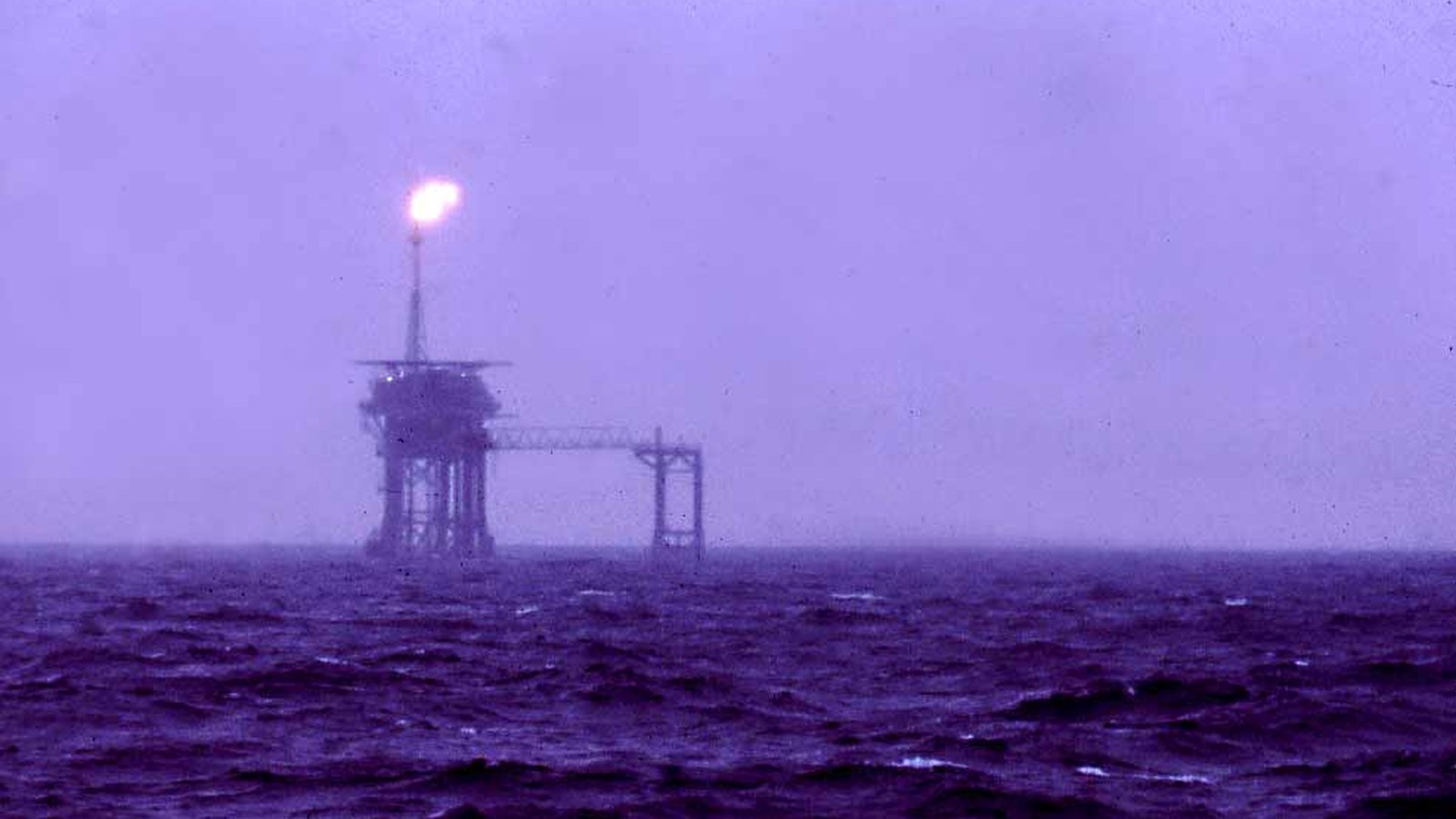
Norway's Government Pension Fund Global — often called the Oil Fund — is one of the world's largest sovereign wealth funds. Managed by Norges Bank Investment Management (NBIM) on behalf of the Ministry of Finance, it invests revenue from Norway's petroleum sector in international financial markets. The fund's purpose is to share oil wealth across generations, ensuring that today's resource income benefits future Norwegians rather than being spent all at once.
As of early 2025, the fund's market value is approximately USD 1.8 trillion (roughly NOK 19–20 trillion, depending on exchange rates). This figure fluctuates daily with global markets. For the latest official value, see NBIM's website.
This article explains how the fund works, how it is governed, and what principles guide its investments. It is educational only — the Oil Fund is a state asset, not a product individuals can invest in directly.
Norway discovered significant oil and gas reserves in the North Sea in the late 1960s. Rather than spending all petroleum revenue immediately, the Norwegian parliament decided to channel surplus income into a long-term savings fund.
The rationale rests on two observations:
The fund was established in 1990 and received its first capital transfer in 1996. Since then, it has grown through petroleum revenue transfers, investment returns, and currency effects.
The Oil Fund operates within a clear governance framework involving several institutions:
| Institution | Role |
|---|---|
| Ministry of Finance | Owns the fund on behalf of the state; sets the investment mandate and ethical guidelines |
| Norges Bank Investment Management (NBIM) | Manages the fund's investments day-to-day |
| Norges Bank | Parent institution of NBIM; accountable to the Ministry of Finance |
| Stortinget (Parliament) | Approves the fiscal rule and overall framework |
| Council on Ethics | Advises on exclusion of companies based on ethical criteria |
NBIM is one of the world's largest institutional investors. It operates independently within the mandate set by the Ministry of Finance, with a focus on maximising long-term returns subject to acceptable risk.
The fund is not a pension fund in the conventional sense — individual Norwegians cannot pay into it or withdraw from it. The name "Government Pension Fund" reflects its role in funding future public spending, including pension obligations, as part of the broader fiscal framework.
NBIM invests the fund globally across asset classes. The strategic benchmark allocation — set by the Ministry of Finance — provides the target mix. As of recent mandate updates, the allocation is approximately:
The fund holds stakes in thousands of companies across dozens of countries. At times, it has held around 1.5% of all listed global equities — making it a significant presence in international markets while still a minority shareholder in any single company.
NBIM uses a combination of passive index tracking and active management. Much of the equity portfolio tracks global indices, keeping costs low and ensuring broad diversification. Active strategies are applied where NBIM believes it can add value — for example, in security selection, rebalancing, or managing real estate directly.
The fund's sheer size creates constraints. NBIM cannot easily take large positions in small companies or illiquid markets without moving prices. This "size penalty" influences strategy — the fund prioritises liquid, large-cap markets.
A central pillar of Norway's fiscal policy is the fiscal rule (handlingsregelen). The rule states that over time, the government should spend approximately the expected real return on the fund — historically guided around 3% per year.
This means:
The 3% figure is not a guaranteed return — it is a planning assumption for sustainable spending. Actual investment returns vary year to year. In years when returns exceed 3%, the fund grows faster than spending draws it down. In weak market years, the fund's value may decline even as spending continues.
Norges Bank and the Ministry of Finance publish analysis of the fiscal rule's implications for long-term sustainability. The rule prevents the fund from being depleted quickly while allowing it to contribute meaningfully to public finances.
The Oil Fund is subject to ethical guidelines set by the Ministry of Finance. NBIM implements these through:
The Council on Ethics recommends exclusions, which the Ministry of Finance decides upon. NBIM also manages climate-related expectations through its own climate action plan, including net-zero portfolio targets aligned with the Paris Agreement framework.
These guidelines reflect Norwegian societal values and international norms. They also generate debate — some argue exclusions reduce returns, while others argue they protect long-term value by avoiding reputational and regulatory risk.
The fund's growth comes from two sources:
Over its history, investment returns have contributed a substantial share of total fund value — in some periods, more than half. This compounding effect demonstrates the power of long-term investing, though past performance does not predict future results.
NBIM publishes quarterly and annual reports with detailed return figures, benchmark comparisons, and cost ratios. The fund's management costs are relatively low as a percentage of assets — typically a few basis points — reflecting its scale and index-oriented approach.
The Oil Fund's relationship with the domestic economy is deliberately limited. Almost all investments are abroad. This "investing abroad" rule prevents the fund from overheating the Norwegian economy — if billions of oil kroner were invested domestically, it could drive up wages, housing prices, and inflation (the so-called "Dutch disease" problem).
Instead, only the annual fiscal transfer (the ~3% spending rule) flows into the domestic economy through government budgets — funding healthcare, education, infrastructure, and other public services.
The fund also serves as a financial buffer. During crises — such as the 2008 financial crisis or the 2020 pandemic — the fund's value fluctuated, but its long-term horizon allowed NBIM to maintain strategy without forced selling.
The Oil Fund is widely regarded as one of the most transparent sovereign wealth funds in the world. NBIM publishes:
Anyone can browse the fund's holdings on NBIM's website. This transparency supports public trust and academic research.
Individual citizens do not have personal accounts in the fund. It is a state asset managed for collective benefit through fiscal policy. Your connection to the fund is indirect — through public services funded by oil revenue and fiscal transfers.
The fund owns financial assets, not oil reserves. Petroleum resources in the ground belong to the state and are managed separately through licensing and taxation. Revenue from oil production flows into the fund after operating costs and taxes.
The fund is designed to outlast oil production. Decades of saving and compounding returns mean the fund can continue contributing to the budget even as petroleum output declines. The fiscal rule ensures spending stays within sustainable limits.
Much of the portfolio passively tracks indices. NBIM's goal is to achieve returns in line with its benchmark minus costs, not to outperform through speculative stock picking.
Norway's Oil Fund is frequently compared to sovereign wealth funds in Abu Dhabi, Singapore, Saudi Arabia, and other resource-rich nations. NBIM's approach — global diversification, ethical guidelines, transparency, and fiscal discipline — is often cited as a model in sovereign wealth fund governance literature.
However, each fund operates within its own political and economic context. Norway's strong institutions, democratic oversight, and clear fiscal rule distinguish its approach.
No. The Government Pension Fund Global is a state asset. Individual investors cannot buy units or shares in the fund. You can invest in many of the same global companies the fund holds through mutual funds or ETFs, but not in the fund itself.
As of early 2025, the fund's market value is approximately USD 1.8 trillion. The exact figure changes daily with market movements. Check NBIM's website for the current value.
The fiscal rule guides how much of the fund's value the government can spend each year — roughly equivalent to the expected long-term real return (around 3%). It balances current public spending against preserving wealth for future generations.
Norges Bank Investment Management (NBIM), a division of Norges Bank (Norway's central bank), manages the fund on a day-to-day basis within a mandate set by the Ministry of Finance.
Yes. The Ministry of Finance sets ethical guidelines. Companies involved in certain weapons, tobacco, coal, severe environmental damage, or human rights violations may be excluded. NBIM also engages actively with companies on governance and climate issues.
The fund is designed to persist beyond oil production. Investment returns and accumulated capital should continue funding a portion of public spending, subject to the fiscal rule, for decades after petroleum revenue declines.
Last updated: January 2025. Fund values and allocation targets change with market conditions and policy decisions. Refer to NBIM and Norges Bank for the latest official data.
Investing
An educational overview of cryptocurrency regulation, consumer warnings, and tax reporting obligations in Norway — with no exchange recommendations or investment advice.
 Investing
Learn how index funds work, why fees and diversification matter, and what Warren Buffett has said about low-cost passive investing — without hype or return promises.
 Investing
Learn how Norway's aksjesparekonto works — tax deferral, eligible assets, withdrawals, and comparison with ordinary brokerage and fondskonto.